

Ishikawa
Hamagurizaka Maekawa
蛤坂 まえかわ
Step inside a breathtakingly beautiful old Japanese home, not far from Kenrokuen Garden in the heart of Kanazawa, to enjoy a course of masterfully crafted yakitori. Chef Maekawa has a chivalrous style, a voice that comes from deep in his belly, and a politeness that echoes that of his mentor at Torishiki. From those roots and a deep passion for yakitori, he adds rich originality, constantly evolving to delight his guests.
Exterior and Interior
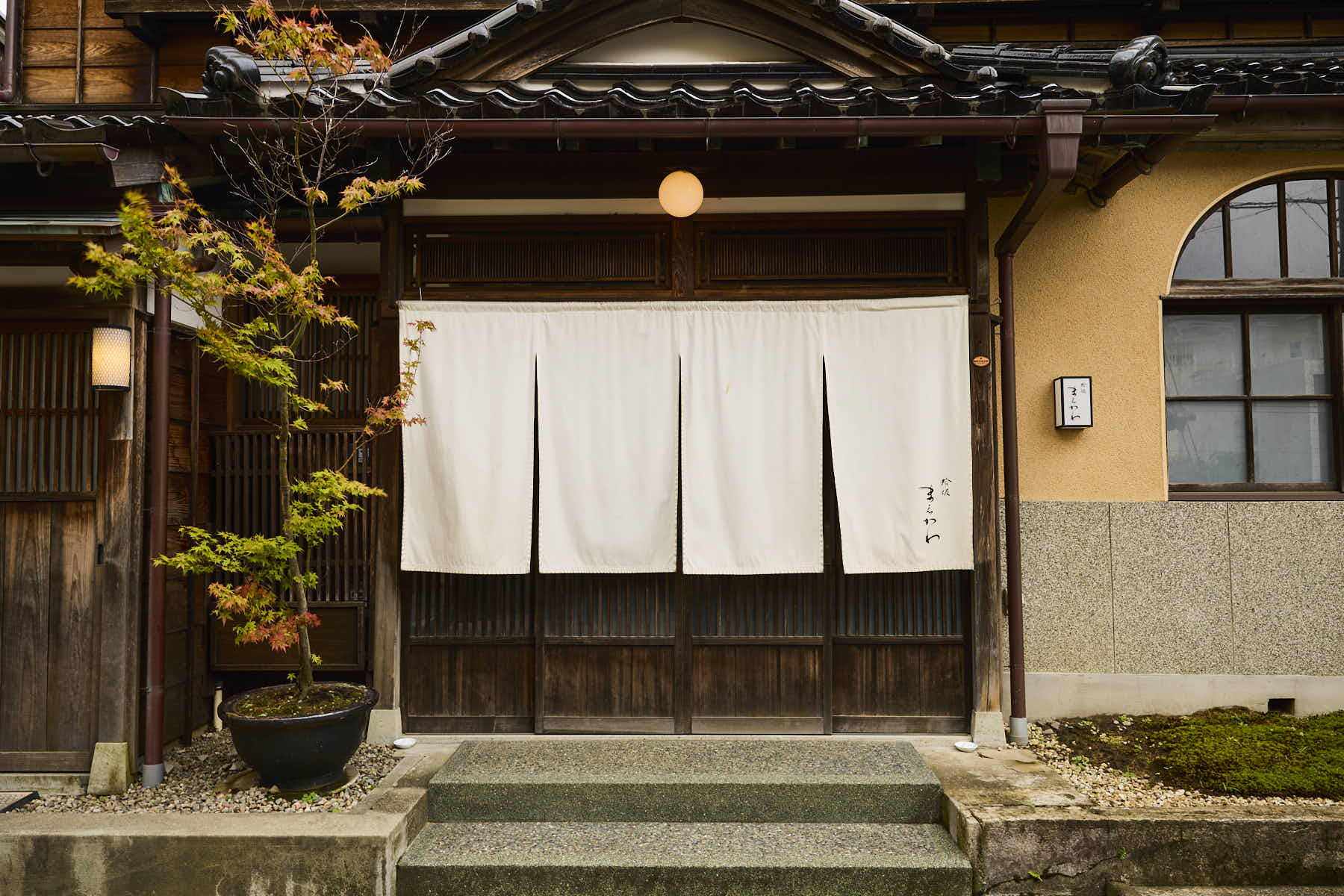
Hamagurizaka Maekawa is the first independent foray for Chef Yoshiteru Maekawa, whose yakitori career began at Torishiki and took him to Torien in New York before bringing him home to Kanazawa. Ascending from the foot of the Sai River Ohashi bridge is Hamagurizaka, a local slope that headlines the restaurant’s name and demonstrates the chef’s deep ties with his hometown. The expansive noren storefront drape bears that name in brushstrokes by calligrapher Asako Ikeda, a Kanazawa native now based in Seoul.
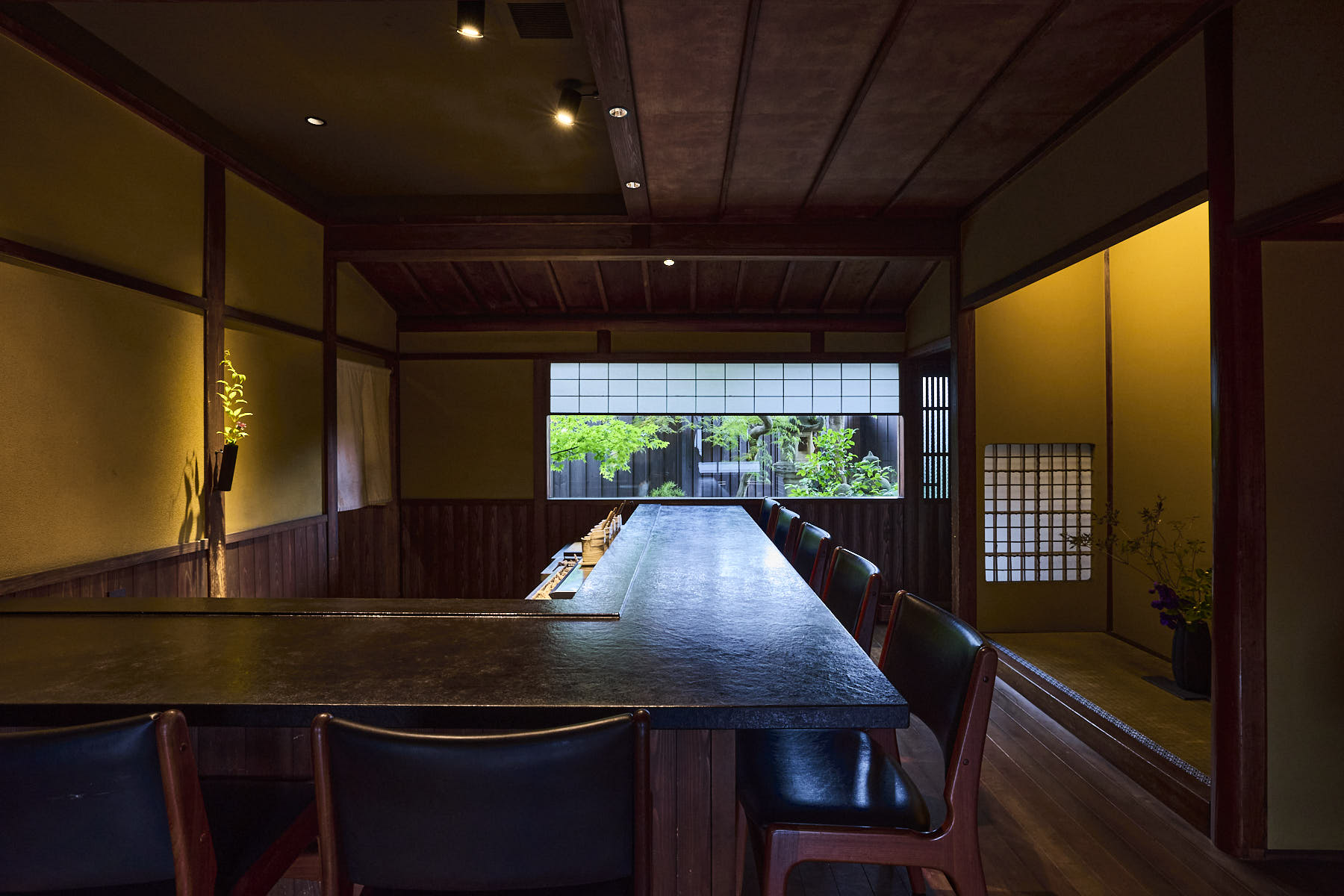
Pass through the noren, remove your shoes at the entrance, change into comfortable slippers and relax in the spacious waiting room. Kanazawa sees a lot of rain and snow, so the chef created this waiting space to give guests a chance to relax, breathe and settle before being guided to their seats. The centenarian building has been renovated into a comfortable space while preserving the aesthetically pleasing, old-fashioned walls and windows that are rarely seen today.
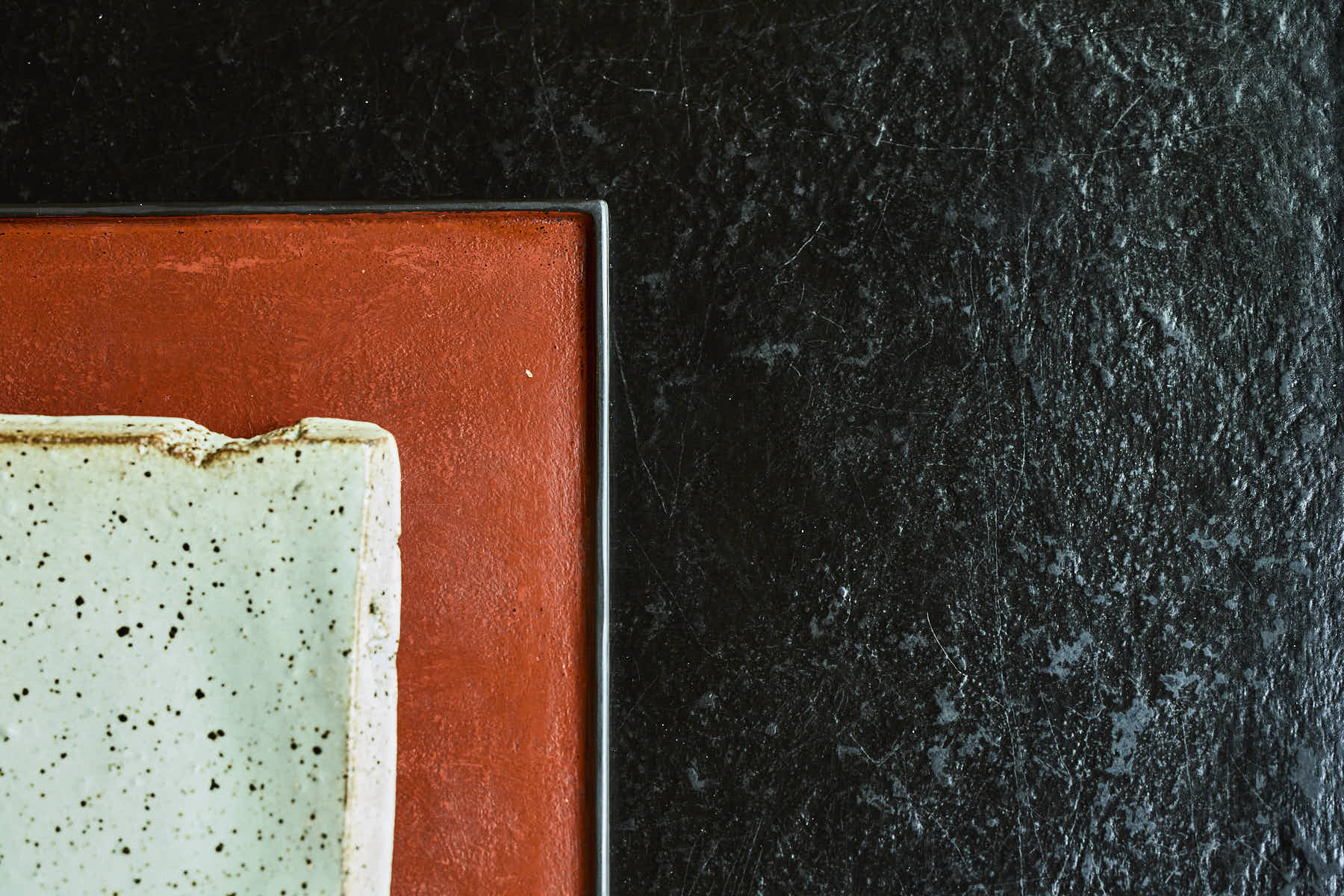
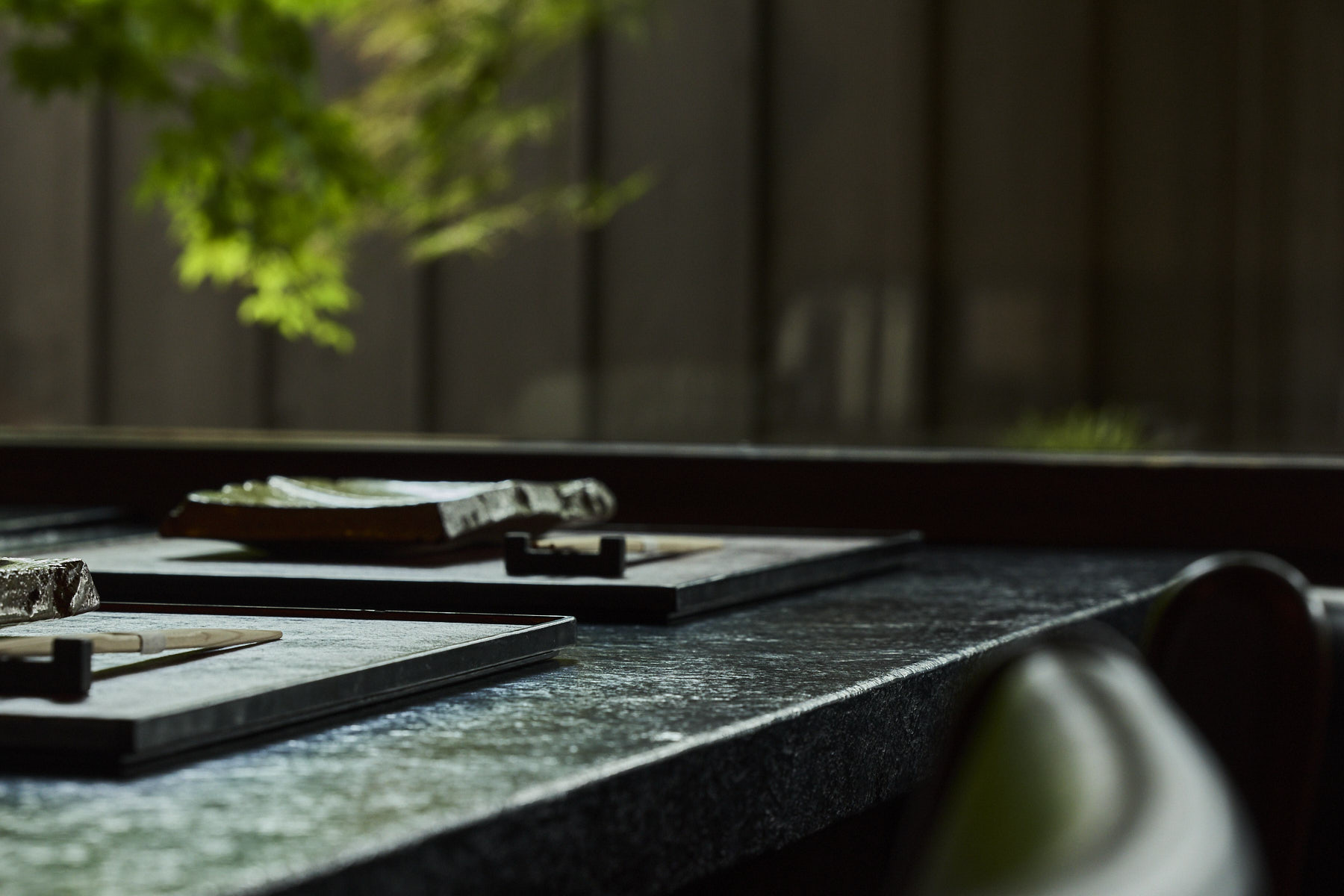
Pass under another curtain into the dining area to find your seat at an L-shaped counter for just eight fortunate diners, with a view out upon the atmospheric garden. The black lacquerware counter’s distinctive matte finish perfectly offsets the red lacquerware trays at each setting, both of which are by Kanazawa lacquerware artist Akihiko Sugita.
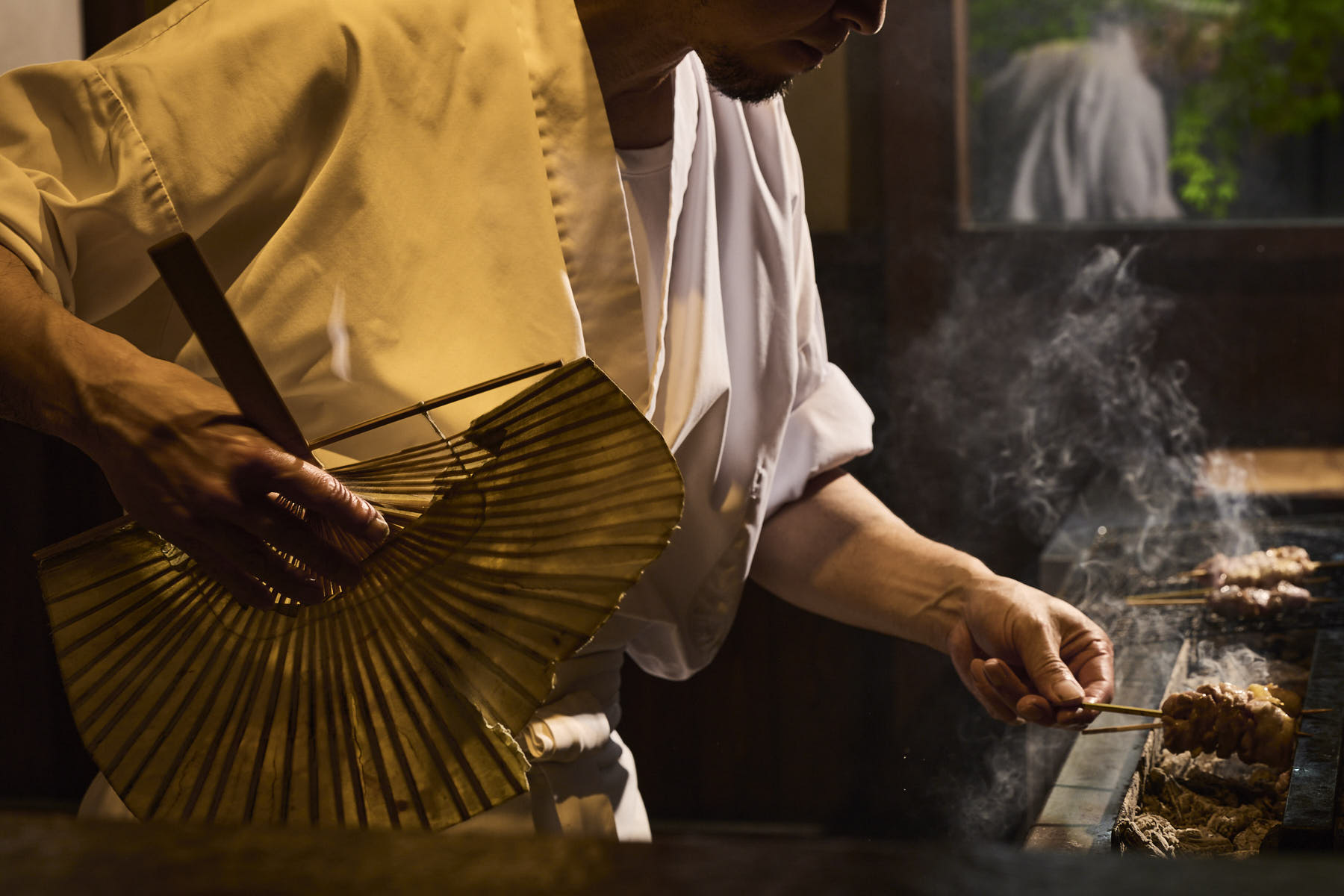
Despite first opening amid the pandemic in December 2020, the restaurant rose to immediate popularity, and guests scrambled to make reservations for the coveted seats at Chef Maekawa’s counter. With the grill right before your eyes, these are front-row seats for a yakitori masterclass without any of the smoke you might expect. Just the smells and the sizzles, the chef fluttering his fan over charcoals before returning it to his back, and the anticipation for the feast to come.
CUISINE
Torishiki Heritage, Kanazawa Spirit
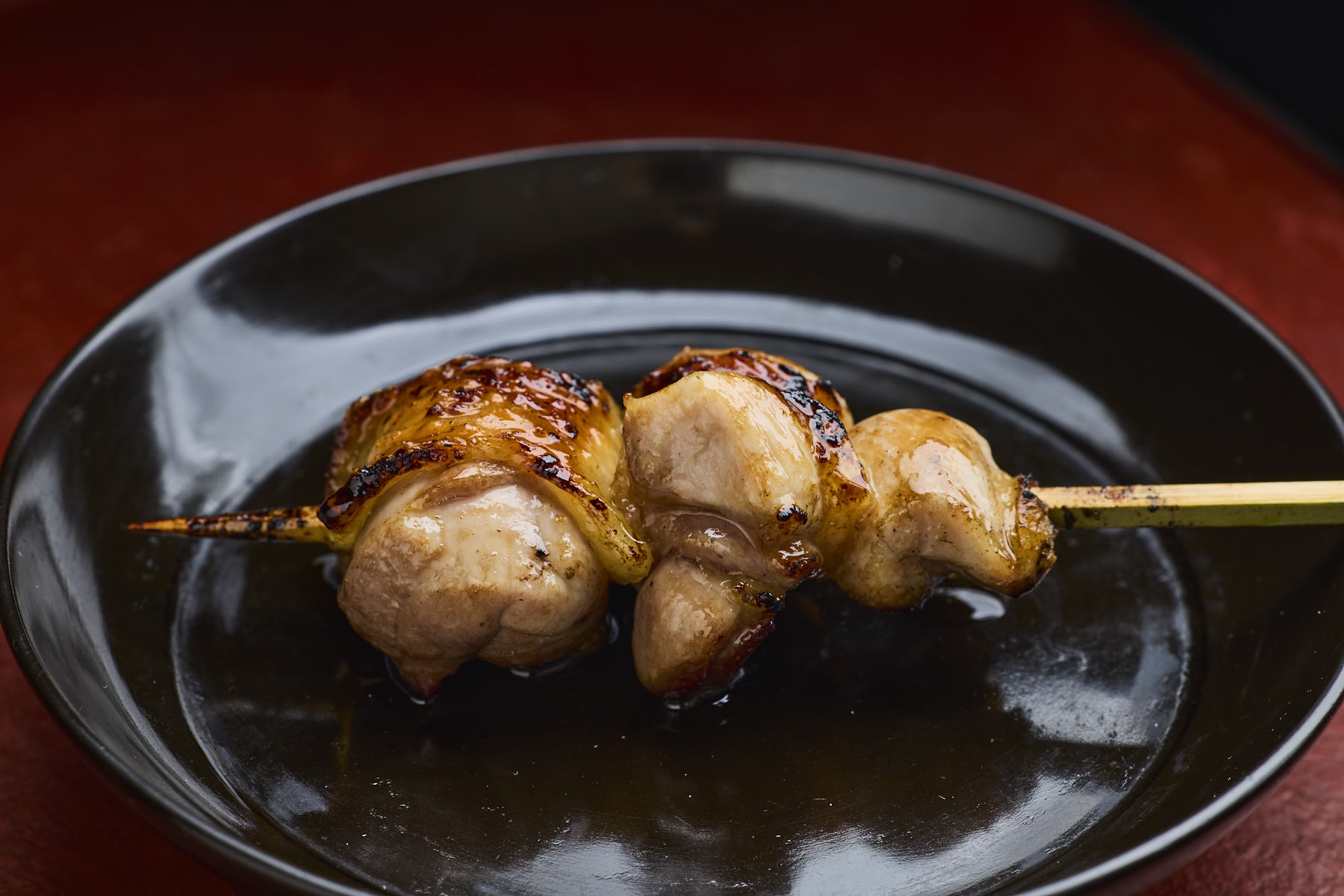
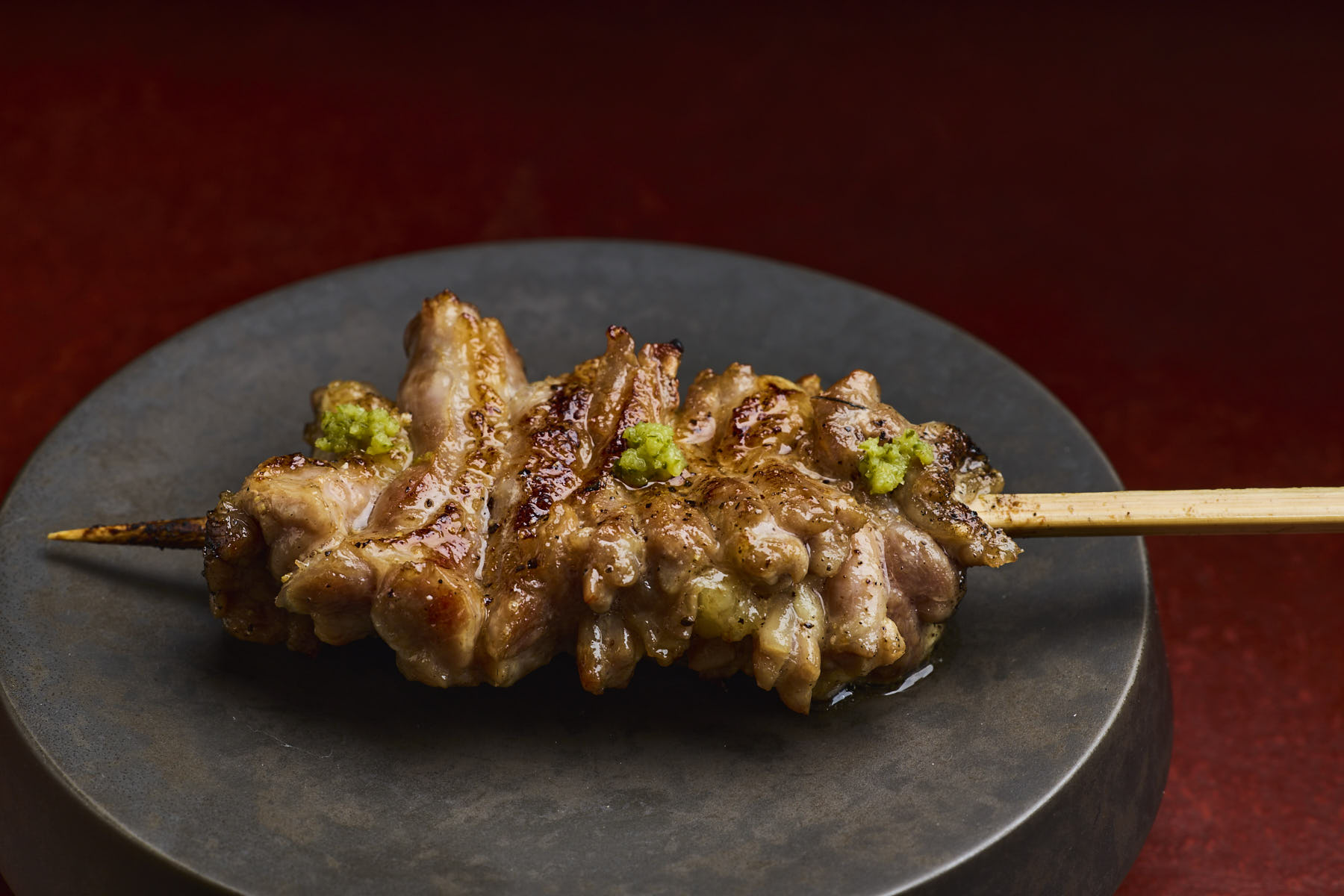
Dive straight into Chef Maekawa’s degustation course with an appetizer featuring charcoal-grilled breast meat from the two chicken breeds he uses at the restaurant—Miyazaki Jitokko and Iwate Horohorocho—and seasonal vegetables served with a plum ponzu dressing. What follows is a sumptuous, filling course that includes skewered chicken meat, chicken neck, vegetables, gizzards, quail eggs, fried tofu, liver, and a soup. Next is your choice of a composed dish or a skewer of chicken oviduct and immature eggs, followed by more vegetables, a skewered chicken meatball, chicken wings, two rice dishes and two kinds of sweets.
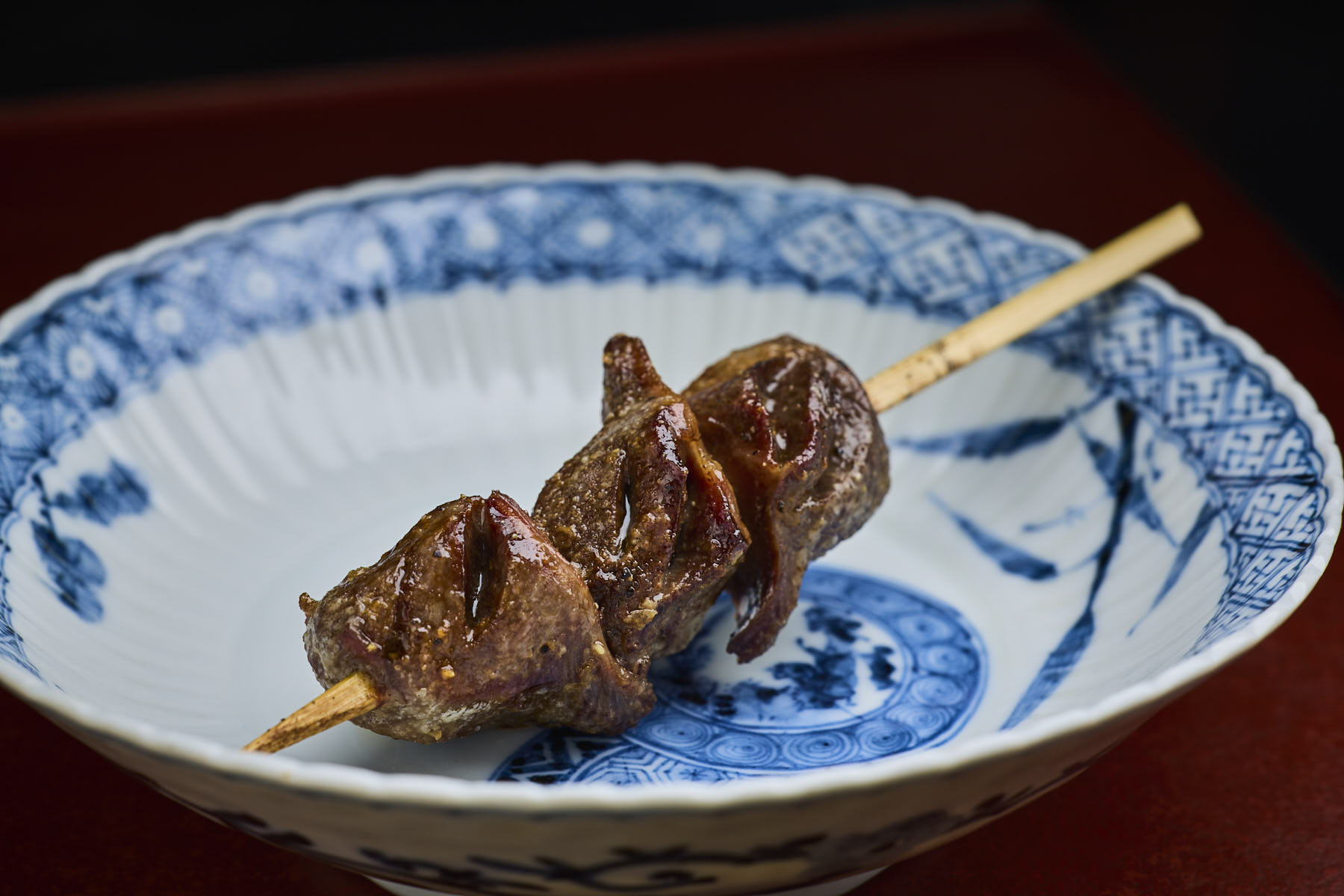
Kishu Binchotan charcoal is laid carefully inside the grill to create the perfect heat levels for each chicken variety. Above sits an array of brushes ready to apply refined Jitokko chicken oil, sesame oil, sake, water, or whatever seasoning the chef chooses for each part. His secret rich tare sauce recipe accentuates the umami of the meat, like the Jitokko chicken skewered breast meat that comes early in the course. The gizzards have a satisfying crunchy texture and delicious flavor that deepens as you chew.
Devour the firm, chewy texture and juicy, fatty flavor of chicken neck, served with spicy pepper paste made from seasonal citrus fruits, like sudachi in June. It is just one example of Chef Maekawa’s excellent use of yuzu, lemon, sudachi, and other seasonal citrus fruits in his homemade accompaniments, such as ponzu dressing, citrus pepper paste, and mi-sansho green Japanese peppercorn miso. The wonderful flavors come through in even the tiniest dab.
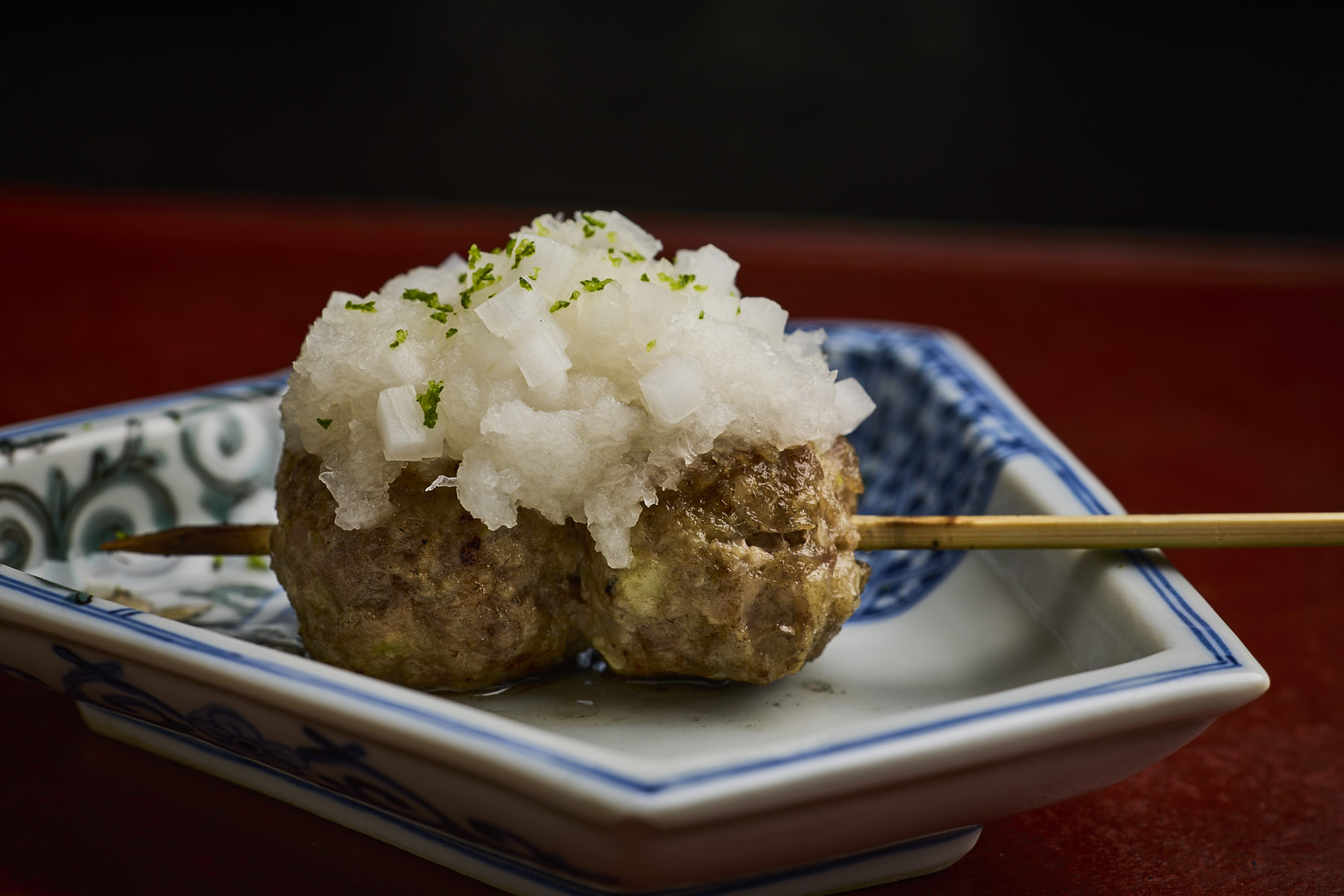
The flavor of the chef’s signature tsukune chicken meatball is outstanding, accented by the fun, crunchy texture of chopped lotus root. It is topped with homemade ponzu and sprinkled with sudachi citrus zest. A combination of tiny cubes and coarsely grated flesh, the accompanying daikon exemplifies the chef’s meticulous knife skills. In June and July, when local Kaga Renkon lotus root is not available, Chef Maekawa substitutes chopped new ginger for an equally superb taste sensation.
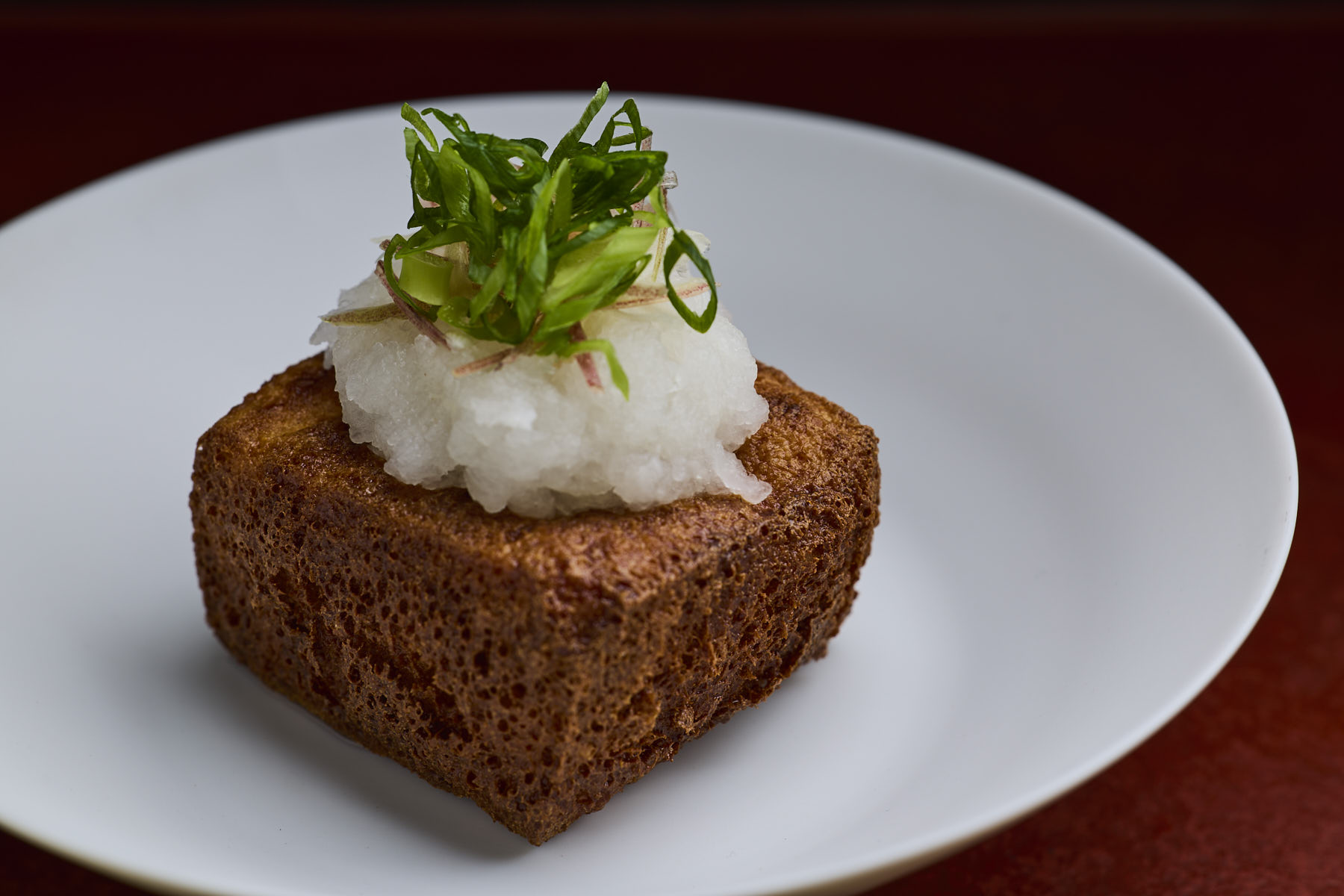
The perfect squares of atsuage thick tofu are made in-house from locally grown soybeans. The dish arrives with grated daikon and other condiments and is enjoyed with a dash of local soy sauce. Fried fresh and grilled over Binchotan charcoal, the aromas are mouthwatering, and the delicious soybean flavors come through in every bite—a contrast between a crispy, thin skin infused with charcoal flavors and a smooth, velvety center.
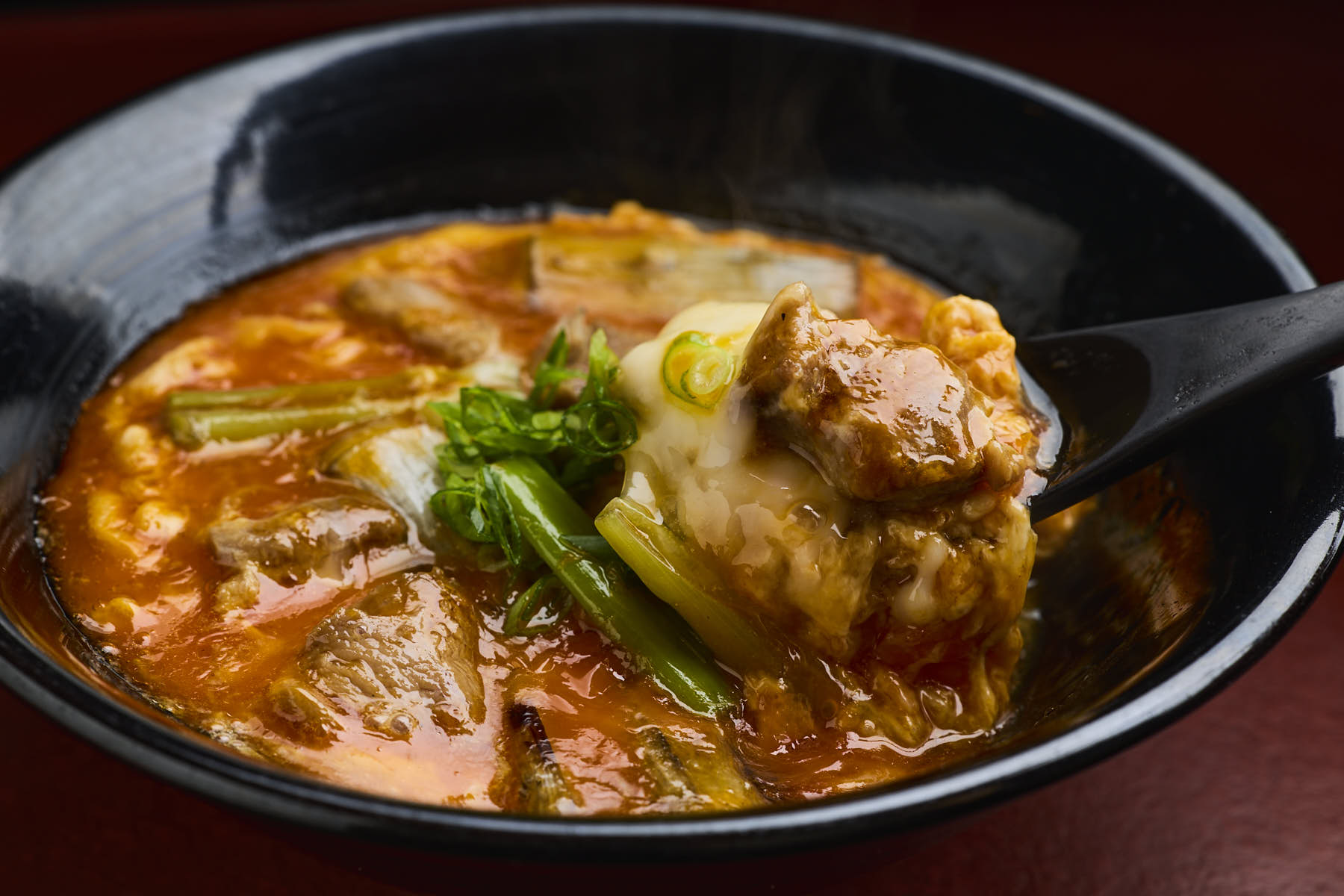
For the closing rice dish, you can enjoy two wonderfully comforting varieties. The first is seasoned chicken mince topping rice, called soboro-don. The second is oyako-don, a dish of seasoned chicken pieces in an eggy sauce, whose name fittingly translates to "mother-and-child bowl." Chef Maekawa’s version is so velvety, it’s like soup, accented by delicious green onions infused with charcoal flavor.
The sweet finish to the course will likely feature Noto salted-lemon jelly atop a blancmange made with either a honey-lemon combination or Kokuryu Brewery’s sake lees.
The sake selection numbers eight varieties, including some local brews, but almost every kind of alcohol is on offer. As Maekawa says, yakitori goes well with everything. And no doubt, you’ll want to partake in a drink or two or three as you watch the chef’s masterful techniques, fanning the charcoals and grilling the yakitori to perfection, all the while your mouth watering in anticipation. Savor the whole yakitori experience in this splendid space oozing old-town Kanazawa charm.
INGREDIENTS
Maekawa uses two breeds for his star ingredient of chicken. One is Horohorocho from Iwate Prefecture, which he uses for chicken wings and liver, among others. Most of the parts, however, come from Jitokko, a local Miyazaki Prefecture variety. Maekawa tells us, “Jitokko is characterized by wonderful firm texture, strong umami, and concentrated flavor. The quality of the innards is also outstanding.” Initially, he used Date-dori—the same variety as at Torishiki. But in his continued search for a breed that suited the yakitori style he aspired to, Maekawa discovered Jitokko.
Wherever possible, Maekawa uses local vegetables. His chicken meatballs contain Kawabata Renkon, a lotus root variety grown using natural farming methods in Kahokugata lagoon just north of Kanazawa. The big, meaty shiitake mushrooms are a variety called Noto Temari. There’s the Baba Farm zucchini, cultivated using spring water; Kurosawa Farm’s corn, freshly picked each morning; and Kinameri nameko mushrooms so splendidly oversized you can even roast them over charcoals. In every case, Maekawa has built personal, trusted relationships with the growers.
The Koshihikari rice served at Hamagurizaka Maekawa is farmed in the lush green Kawaidani valley in Tsubata, Ishikawa. The soy sauce is a locally made brand, and Maekawa’s desserts feature sake lees from the historic Kokuryu Brewery. One delectable, skewered dish features quail eggs. The EL France variety is not only about fifty percent larger than typical quail eggs, but its yolks are also rich in flavor and incredibly creamy.
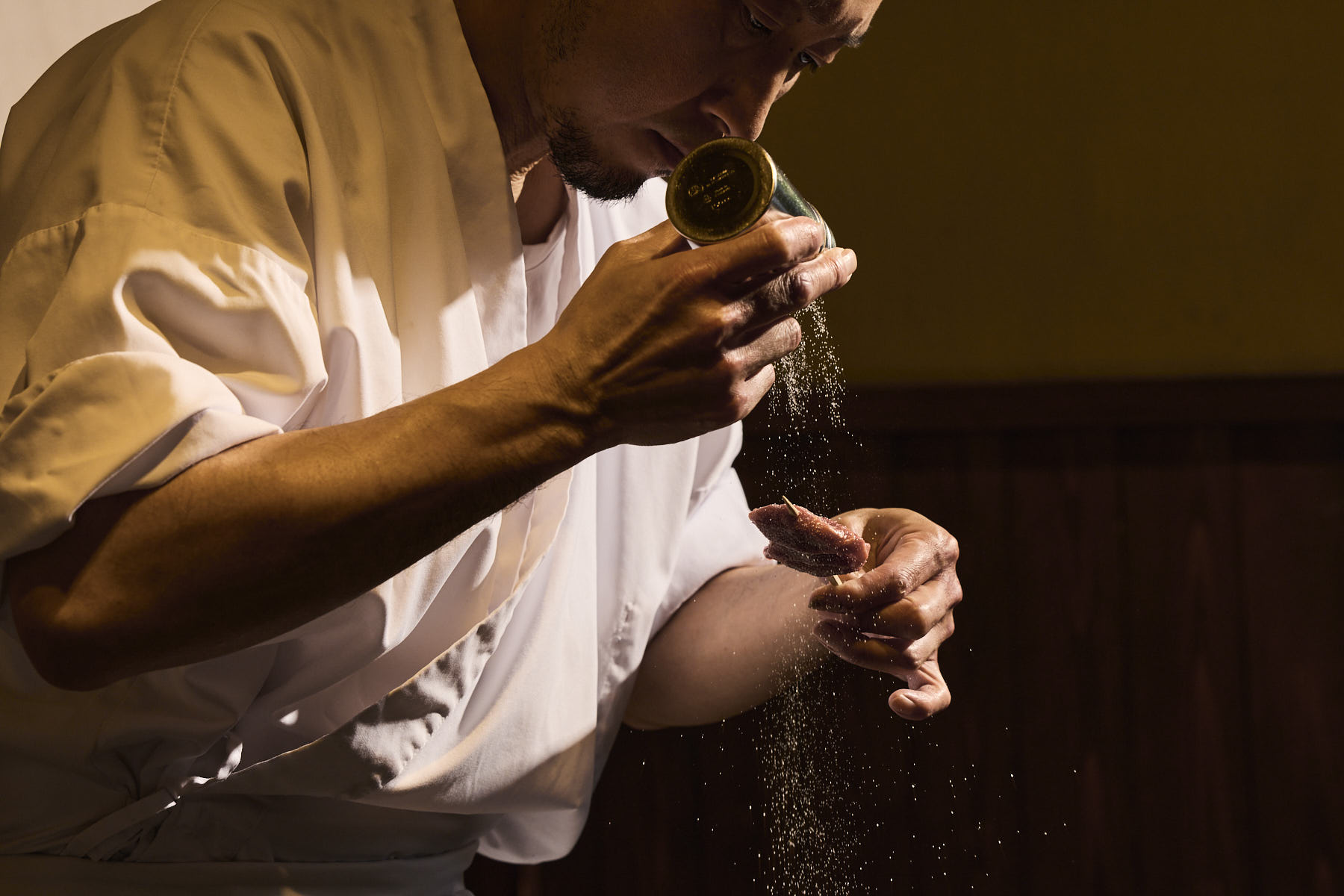
CHEF
Yoshiteru Maekawa
Kanazawa Handicrafts
Kanazawa lacquerware artist Akihiko Sugita was responsible for the counter and the wooden trays before each guest. They exude that distinctive quality of lacquerware, melding with the interior of the 105-year-old traditional home to create a moment of complete indulgence. Chef Maekawa has a great passion for the traditional handicrafts of Kanazawa, so as you sit at the counter, take the opportunity to ask about the items you see all around.
The tableware is the work of various artists with deep connections to Ishikawa Prefecture. Ceramic artist Kiyoko Morioka creates pieces without glazes, imbuing them with a smooth, comfortable feel in your hands by gently polishing their surfaces with a file. It is their simplicity and gentle feel that appeal. Cyoza Yamamoto revives Ai Ko-Kutani (Indigo Old Kutani) techniques in modern porcelain pieces that are so highly acclaimed that he receives regular orders from the imperial household and foreign dignitaries who wish to entertain with his works. For glassware, Maekawa is especially fond of works by Masaki Kusada, who employs the pin-blow technique of glassblowing to produce pieces that are exquisitely soft and transparent.
Course
- The price includes our booking fee of ¥8,000
- The price includes our booking fee of ¥8,000
Ishikawa
Hamagurizaka Maekawa
蛤坂 まえかわ


- GENRE
- Yakitori, Kanazawa
- ADDRESS
-
1F, 1 Chome-1-9 Nomachi, Kanazawa, Ishikawa 921-8031

- OPEN
- 5PM/8:15PM
- CLOSED
- Irregular
- URL
- NA
- PHONE
- NA


